

Paleo and Keto: A Modern Food Face-Off
It feels like there’s a new "it’ diet every week, doesn’t it? Right now, Paleo and Keto consistently top the lists, sparking endless debates about which one is ‘better’. But honestly, framing it as a competition misses the point. Both are powerful eating approaches, but they work differently and suit different people. Interest in both diets has surged; a 2023 Google Trends analysis shows both ‘Paleo diet’ and ‘Keto diet" consistently remain high in search volume, indicating sustained public engagement.
People are drawn to these diets for a variety of reasons – weight loss is a big one, of course, but also improved energy levels, better health markers, and a desire to feel more in tune with their bodies. Many find themselves stuck trying to decipher the differences, and that's where things get confusing. My goal here is to break down Paleo and Keto, side-by-side, so you can understand which one might be the best fit for your life.
First, I'll cover what each diet actually is – the core principles, allowed foods, and restrictions. Then, we'll compare and contrast them to help you make an informed decision. By the end, you should have a much clearer picture of Paleo versus Keto and which path might lead you toward your health goals.
The sheer number of online resources and conflicting information can be overwhelming, making it easy to feel more confused than when you started. My aim is to cut through the noise and provide a straightforward, evidence-based comparison.
Decoding the Paleo Diet: Back to Our Roots?
The Paleo diet, often called the "caveman diet,’ is rooted in the idea that humans are genetically best suited to the foods our hunter-gatherer ancestors ate before the advent of agriculture. The core principle is to eat foods that were available during the Paleolithic era – roughly 2.5 million to 10,000 years ago. It’s about returning to a more ‘natural" way of eating, focusing on whole, unprocessed foods.
So, what does that look like in practice? Allowed foods include meat (preferably grass-fed), fish and seafood, fruits, vegetables, nuts, and seeds. These foods are considered nutrient-dense and align with the ancestral eating pattern. However, the Paleo diet restricts grains (wheat, rice, corn), legumes (beans, lentils, peanuts), dairy, processed foods, refined sugars, and vegetable oils. These are excluded because they were introduced after the advent of agriculture and are believed to contribute to inflammation and modern health problems.
The why behind these restrictions is key. Proponents of the Paleo diet believe that grains and legumes contain anti-nutrients that interfere with nutrient absorption and contribute to gut inflammation. Dairy is excluded due to potential lactose intolerance and its relatively recent introduction to the human diet. Processed foods are simply off-limits because they weren’t available to our ancestors and are often loaded with unhealthy ingredients.
It’s important to note that Paleo isn’t a rigid set of rules. There are variations. Some people follow a strict Paleo approach, while others are more relaxed, allowing small amounts of dairy or white rice. It also isn’t solely about protein. While meat is a component, a well-balanced Paleo diet includes plenty of fruits and vegetables – aiming for a colorful plate at every meal.
The Keto Commitment: Fat as Fuel
The ketogenic diet, or Keto, is a very low-carbohydrate, high-fat diet. Its core principle is to drastically reduce carbohydrate intake to force the body into a metabolic state called ketosis. This is a significant departure from the standard Western diet, which relies heavily on glucose (from carbohydrates) for energy.
In ketosis, the body switches from burning glucose to burning fat for fuel. To achieve this, Keto typically involves consuming around 70-80% of your daily calories from fat, 20-25% from protein, and only 5-10% from carbohydrates – usually less than 50 grams per day. It's a very specific macronutrient breakdown, and consistency is crucial.
Ketosis happens when your body depletes its glycogen stores (stored glucose) and starts breaking down fat into ketones, which are then used as an energy source. This process can lead to weight loss, but it also comes with potential side effects, particularly in the initial stages. Many people experience the "keto flu" – a temporary set of symptoms like fatigue, headache, and nausea – as their body adjusts to burning fat for fuel.
Allowed foods on Keto include healthy fats (avocado, olive oil, coconut oil), non-starchy vegetables (leafy greens, broccoli, cauliflower), and some proteins (meat, fish, eggs). Restricted foods are sugars, grains, most fruits, starchy vegetables (potatoes, corn), and legumes. There’s also a spectrum within Keto. "Dirty Keto’ allows for processed keto-friendly foods, while ‘Clean Keto" emphasizes whole, unprocessed foods – similar to the Paleo philosophy.
Paleo vs. Keto: The Key Differences – A Side-by-Side Look
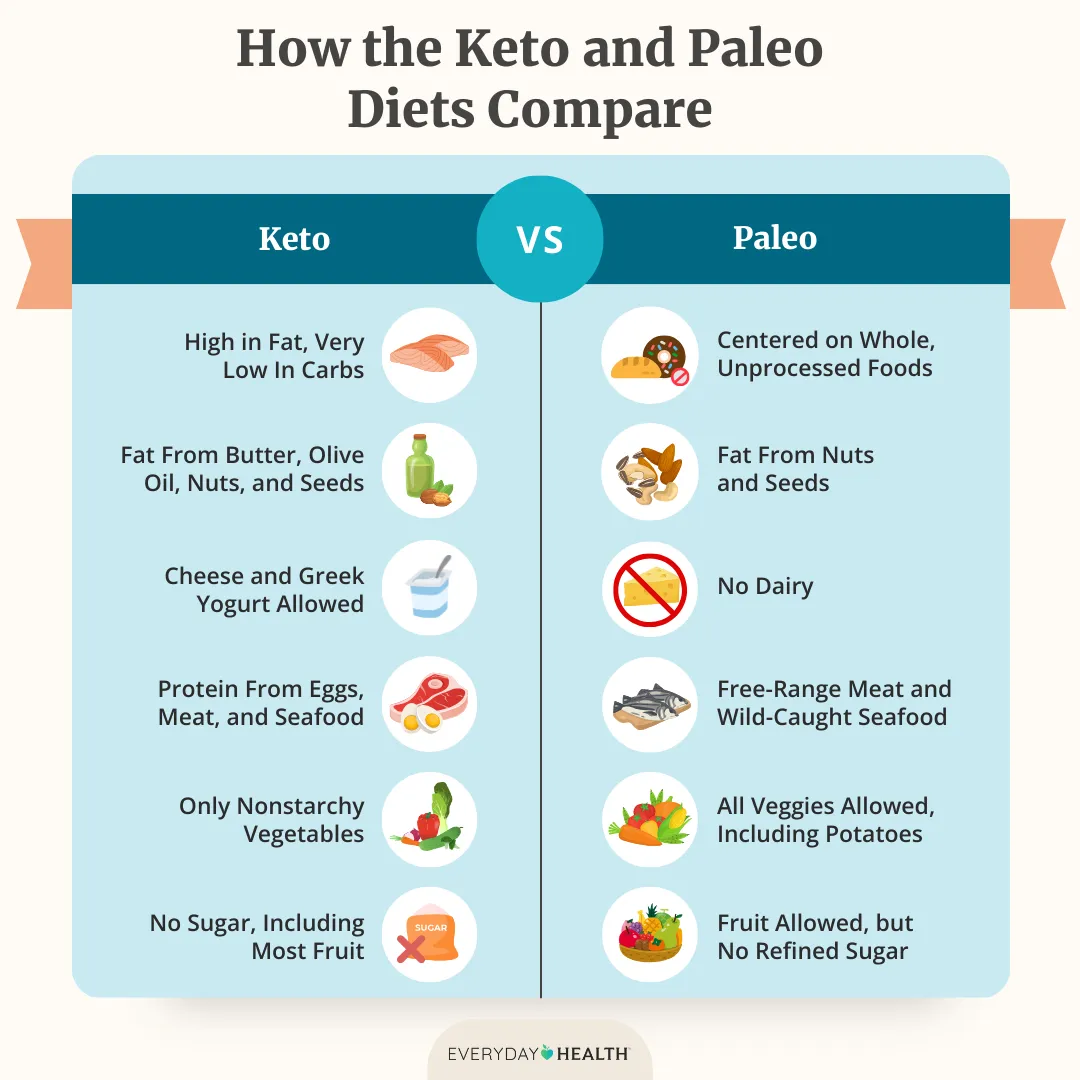
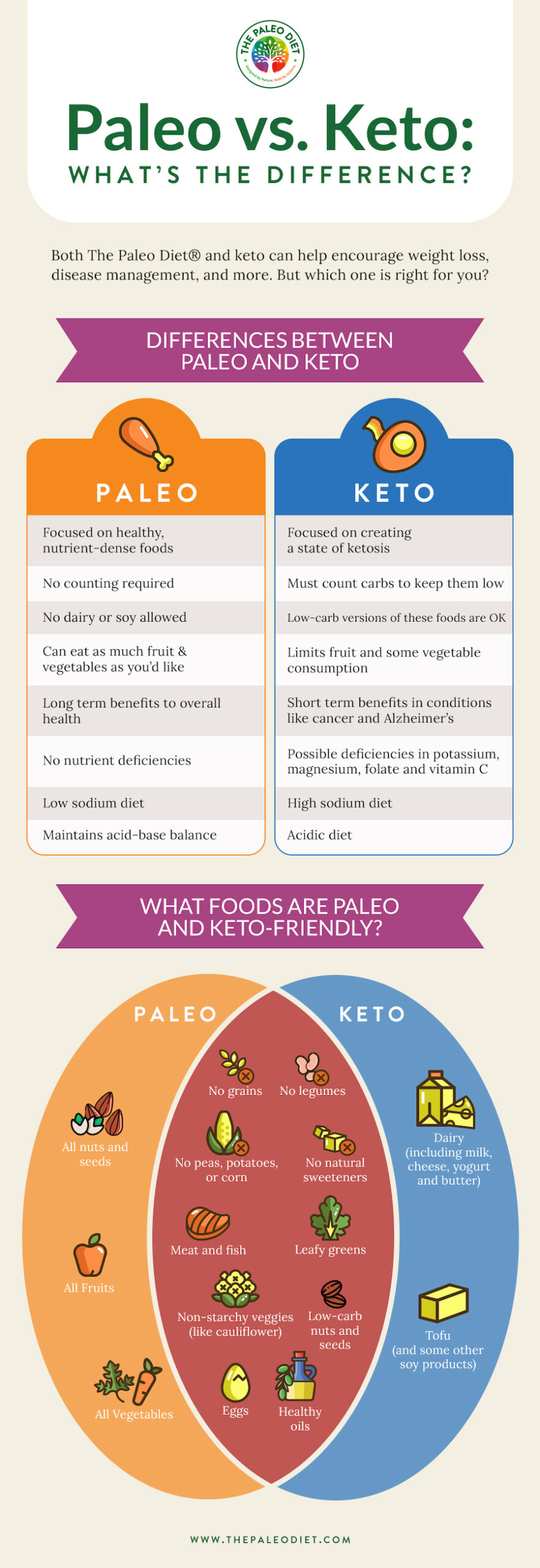
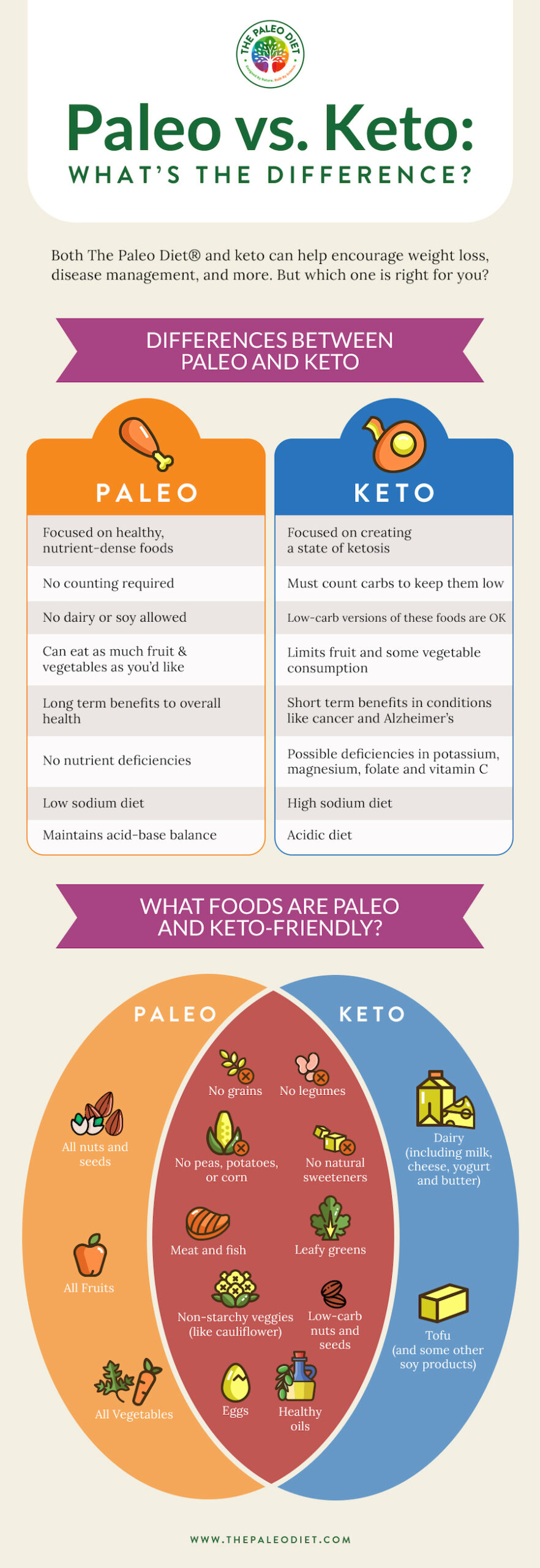
The most significant difference between Paleo and Keto is carbohydrate intake. Keto is extremely low-carb, aiming for under 50 grams per day, while Paleo allows for moderate amounts of carbohydrates from fruits and vegetables. This fundamental difference drives the metabolic processes each diet aims to achieve.
Protein and fat levels also differ. Keto prioritizes fat as the primary fuel source, with moderate protein intake. Paleo emphasizes moderate protein intake alongside a balance of fats and carbohydrates. This affects how your body utilizes energy and impacts satiety levels.
Let’s look at specific food examples. Sweet potatoes are allowed on Paleo but are generally avoided on Keto due to their carbohydrate content. Heavy cream, a staple in Keto for its high fat content, is often restricted on Paleo due to its dairy origin. Nuts and seeds are allowed on both, but portion sizes may differ. Dairy is a major point of divergence; Paleo generally excludes it, while some Keto diets incorporate high-fat dairy.
The intent of each diet is also distinct. Paleo focuses on eating whole, unprocessed foods that our ancestors ate, aiming to reduce inflammation and improve overall health. Keto, on the other hand, focuses on achieving a specific metabolic state – ketosis – to burn fat for fuel. While both can lead to weight loss, their underlying mechanisms are different. It’s important to note that dairy inclusion varies widely within both diets, depending on individual tolerance and interpretation of the guidelines.
- Carbohydrate Intake: Keto is very low-carb (<50g/day), Paleo allows moderate carbs from fruits and vegetables.
- Fat Intake: Keto is high-fat (70-80% of calories), Paleo is moderate-fat.
- Protein Intake: Both diets emphasize moderate protein intake.
- Dairy: Paleo generally excludes dairy, Keto may include high-fat dairy.
- Grains & Legumes: Both diets exclude grains and legumes.
Paleo vs. Keto: A Comparative Overview (2024)
| Factor | Paleo | Keto |
|---|---|---|
| Carb Intake | Moderate (varies, generally 30-150g per day) | Very Low (typically 20-50g net carbs per day) |
| Protein Intake | Moderate (15-35% of daily calories) | Moderate to High (20-25% of daily calories) |
| Fat Intake | Moderate (30-50% of daily calories) | High (70-80% of daily calories) |
| Dairy Allowed | Generally avoided, though some may include ghee or limited full-fat dairy | Generally limited; full-fat options may be permissible in moderation depending on carb count |
| Legumes Allowed | Not allowed (beans, lentils, peanuts) | Not allowed |
| Grains Allowed | Not allowed (wheat, rice, corn, oats, etc.) | Not allowed |
| Focus | Whole, unprocessed foods; evolutionary consistency | Inducing and maintaining ketosis – a metabolic state |
| Difficulty (Adherence) | Moderate – requires significant dietary changes but offers more flexibility than Keto | High – very restrictive, can be challenging to maintain long-term |
| Sustainability (Long-Term) | Potentially high - emphasizes whole foods and lifestyle changes | Potentially moderate - requires consistent monitoring and adherence to maintain ketosis |
Illustrative comparison based on the article research brief. Verify current pricing, limits, and product details in the official docs before relying on it.
Weight Loss Showdown: Which Diet is Faster?
Many people turn to these diets specifically for weight loss, so which one delivers faster results? Initial weight loss is often more rapid on Keto due to the significant reduction in carbohydrate intake, leading to water loss. When you restrict carbs, your body depletes its glycogen stores, and glycogen holds onto water. As you deplete glycogen, you lose water weight quickly.
However, this initial rapid weight loss isn’t necessarily fat loss. Long-term weight loss potential depends on adherence and sustainability. Both Paleo and Keto can be effective for weight loss if followed consistently. A study published in the American Journal of Clinical Nutrition (2013) found both low-carb and Paleo diets resulted in significant weight loss, with no significant difference between the two after six months.
It’s crucial to remember that weight loss is highly individualized. Factors like metabolism, activity level, genetics, and overall calorie intake all play a role. What works for one person may not work for another. There’s no magic bullet. Both diets can also impact muscle mass; Keto, if protein intake is insufficient, could potentially lead to muscle loss, while Paleo, with adequate protein, may be more conducive to maintaining muscle mass during weight loss.
Ultimately, the "faster’ diet is the one you can stick with long-term. If you find Keto too restrictive, you"re unlikely to maintain it. If you struggle with the Paleo restrictions on certain food groups, you may also falter. Sustainable lifestyle changes are key.
Paleo vs Keto: The Science of Weight Loss Explained by a Dietitian
Nutrition Insights with Dr. Anya Sharma
Watch on YouTube →Beyond Weight Loss: Health Benefits Compared
The benefits of Paleo extend beyond just weight loss. The emphasis on whole, unprocessed foods can improve gut health by providing fiber and nutrients that support a healthy microbiome. Reducing inflammation is another potential benefit, as processed foods, refined sugars, and grains are often inflammatory triggers. Paleo may also contribute to better blood sugar control by eliminating refined carbohydrates.
Keto also boasts potential health benefits. It’s known for its effectiveness in managing blood sugar levels, making it a potentially beneficial diet for individuals with type 2 diabetes – under medical supervision. The Epilepsy Association highlights Keto’s long-standing use in managing epilepsy, particularly in children who don’t respond to medication. Emerging research also suggests potential benefits for neurological conditions like Alzheimer’s disease, but more research is needed.
However, both diets have potential risks. Keto can lead to nutrient deficiencies if not carefully planned, and the "keto flu" can be unpleasant. Paleo can be expensive, as it often requires purchasing high-quality meats and produce. Both diets may also impact cholesterol levels; Keto can sometimes raise LDL cholesterol in certain individuals, while Paleo's impact on cholesterol is more variable depending on fat sources.
It's essential to approach both diets with caution and consider individual health conditions. Consulting with a healthcare professional before making significant dietary changes is always recommended. Focusing on nutrient density and balance is vital, regardless of which diet you choose.
Who Wins? Finding the Right Fit for *You*
So, which diet comes out on top? The truth is, there’s no universal winner. The best diet is the one that aligns with your individual needs, preferences, and health goals. Paleo might be a good fit if you prioritize whole, unprocessed foods, have digestive issues, or prefer a less restrictive approach. It’s a sustainable lifestyle change for many.
Keto might be more suitable if you have insulin resistance, type 2 diabetes, or certain neurological conditions – always under the guidance of a healthcare professional. It can be effective for rapid weight loss and blood sugar control, but it requires discipline and careful planning. It’s not necessarily a long-term solution for everyone.
Here’s a quick checklist to help you decide:
Both diets can be adapted. You could, for example, incorporate elements of both – focusing on whole foods from Paleo while occasionally utilizing Keto-friendly fat sources. It’s about finding what works best for you and your body.
Ultimately, listen to your body. Pay attention to how you feel on each diet. Consider your lifestyle and whether you can realistically maintain the restrictions long-term.
- Paleo: Do you prioritize whole, unprocessed foods?
- Paleo: Do you have digestive issues or sensitivities to grains and legumes?
- Paleo: Do you prefer a less restrictive approach?
- Keto: Do you have insulin resistance or type 2 diabetes (and are under medical supervision)?
- Keto: Are you looking for rapid weight loss?
- Keto: Are you comfortable with strict carbohydrate restriction?
Making the Transition: Paleo and Keto Meal Ideas
Transitioning to either diet can feel daunting, but with a little planning, it’s manageable. For Paleo, focus on building meals around protein, vegetables, and healthy fats. Breakfast could be eggs with spinach and avocado; lunch could be a salad with grilled chicken or fish; and dinner could be roasted salmon with sweet potatoes and broccoli. Check out our Paleo recipes on Paleo Meals Direct for inspiration!
For Keto, prioritize high-fat foods and non-starchy vegetables. Breakfast could be scrambled eggs with cheese and bacon; lunch could be a salad with avocado, olive oil, and grilled chicken; and dinner could be steak with roasted cauliflower. It’s important to track your macronutrient intake to ensure you’re staying in ketosis.
Common challenges include cravings and social situations. Plan ahead for social events by bringing your own Keto- or Paleo-friendly snacks or meals. Cravings can be managed by ensuring you’re eating enough fat and protein to stay satisfied. Don’t be afraid to experiment with different recipes and find what you enjoy!
Eating out on either diet requires some strategy. Look for restaurants that offer grilled or roasted meats and vegetables. Ask for sauces and dressings on the side. Be mindful of hidden carbohydrates in sauces and marinades. With a little preparation, you can stay on track even when dining out.
- Paleo Breakfast: Eggs with spinach and avocado
- Paleo Lunch: Salad with grilled chicken or fish
- Paleo Dinner: Roasted salmon with sweet potatoes and broccoli
- Keto Breakfast: Scrambled eggs with cheese and bacon
- Keto Lunch: Salad with avocado, olive oil, and grilled chicken
- Keto Dinner: Steak with roasted cauliflower
Content is being updated. Check back soon.
No comments yet. Be the first to share your thoughts!