

Where paleo and keto stand in 2026
Paleo and keto are still the heavy hitters in low-carb circles, but the rigid rules are fading. Paleo focuses on meat, fish, and plants—stuff a hunter-gatherer might find. Keto is stricter, cutting carbs to almost zero to force the body into ketosis. By 2026, we're seeing more people use home blood tests to tweak these diets rather than following a generic book.
People gravitate towards Paleo for its emphasis on nutrient density and sustainable lifestyle changes, often seeking improved energy and overall health. Keto, on the other hand, frequently attracts those looking for rapid weight loss or managing specific health conditions like epilepsy. The trend towards personalized nutrition suggests that in 2026, we’ll see fewer rigid adherence to either diet, and more hybrid approaches tailored to individual needs.
The core principles are holding steady now, but things are changing. We’re learning that "one size fits all’ rarely works when it comes to nutrition. Expect to see more emphasis on bio-individuality and less dogma surrounding what constitutes a ‘Paleo’ or ‘Keto’ approved food. The goal isn"t just weight loss anymore; it's optimizing health and well-being for the long term.
Food lists versus macro tracking
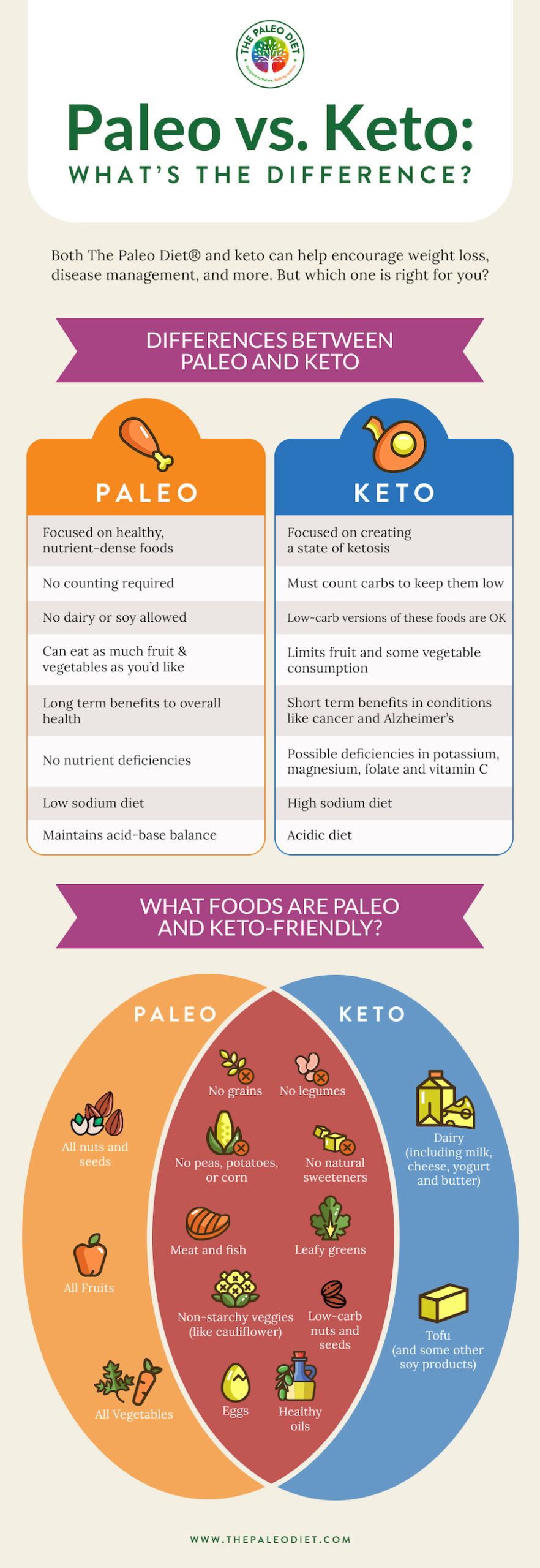
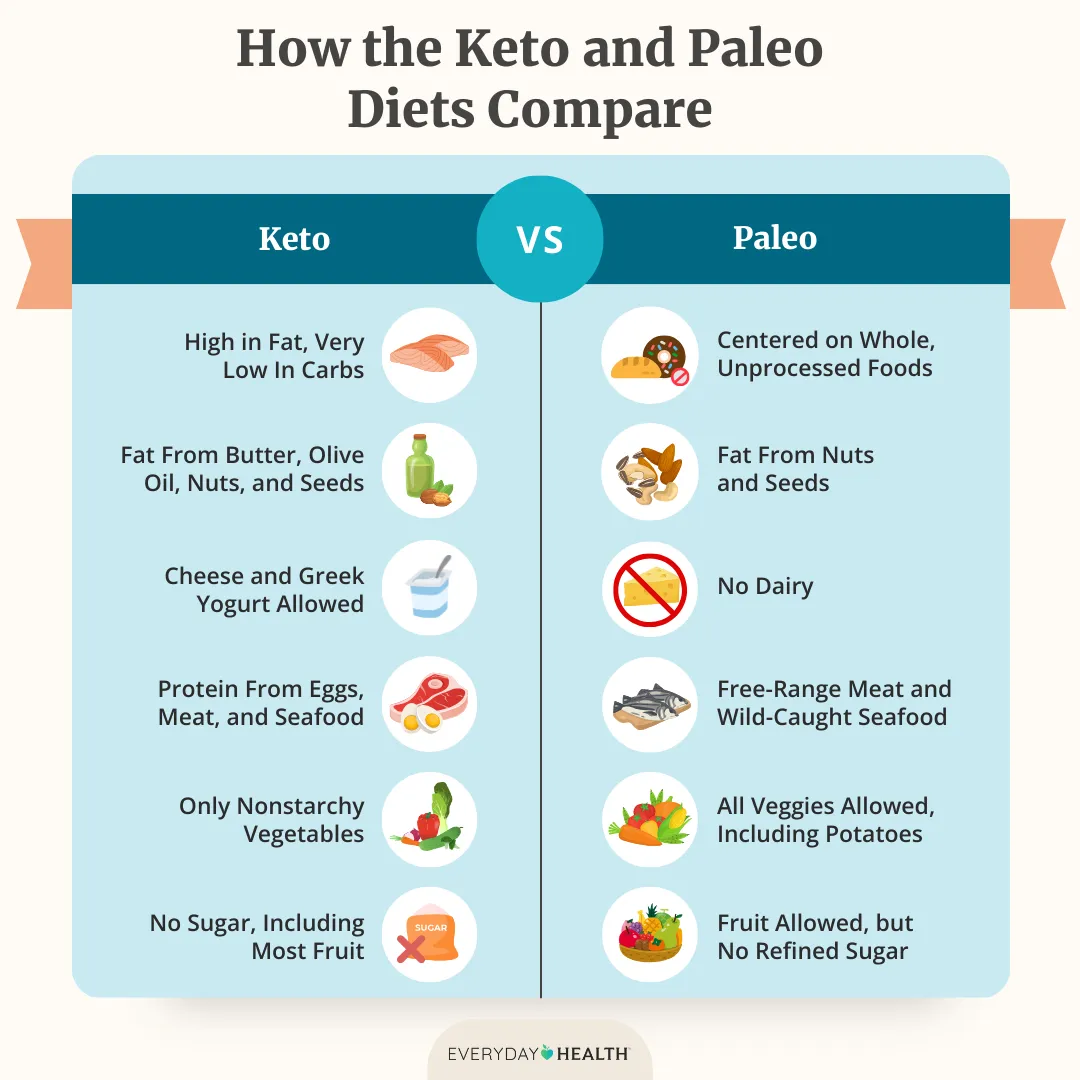
The real split is between food types and math. Paleo is about the source: if a caveman couldn't hunt or gather it, you don't eat it. Keto is about the numbers: 75% fat, 20% protein, and 5% carbs. You can eat processed junk on keto as long as the macros fit, but paleo forbids it.
What you can eat on Paleo is fairly broad, but processed foods, grains, legumes, and dairy are generally avoided. Keto is far more restrictive regarding carbohydrates, eliminating most fruits, starchy vegetables, and grains. A common misconception is that Paleo is a high-protein diet, but it’s more about balanced macronutrient intake within the allowed food groups. Keto, by its nature, demands meticulous tracking of fat, protein, and carb intake.
"Paleo-ish" eating is common, with many people adopting the core principles while allowing for some flexibility – perhaps including dairy or occasionally indulging in a small amount of white rice. Keto also has varying degrees of strictness; some follow a standard ketogenic diet, while others experiment with targeted or cyclical keto. Dairy is a frequent point of contention. While Paleo traditionally excludes it, many modern Paleo practitioners reintroduce full-fat dairy products.
The reality of keeping the weight off
Both Paleo and Keto can lead to initial, rapid weight loss, largely due to water weight reduction and the elimination of processed foods. Keto, in particular, often produces quicker results because of its drastic carbohydrate restriction, forcing the body to burn fat for fuel. However, maintaining that weight loss is where things get tricky. The initial speed doesn’t always translate to lasting change.
A significant factor in long-term success is adherence. Keto’s restrictive nature can be difficult to sustain long-term, leading to yo-yo dieting. Paleo, with its more flexible approach, might be easier to incorporate into a sustainable lifestyle. Muscle retention is also important; both diets, if not carefully planned, can lead to muscle loss along with fat. Focusing on adequate protein intake and strength training is essential.
Individual results vary wildly, influenced by factors like genetics, activity level, and overall health. While The psychological aspect of restriction also plays a role; finding a sustainable eating pattern that doesn't feel overly deprived is key.
- Keto drops weight fast at first, mostly because you're losing water as glycogen stores empty.
- Paleo is usually easier to stick with for a year or more because you aren't counting every gram of sugar in a bell pepper.
- Muscle Retention: Requires adequate protein and strength training on both diets.
Paleo vs. Keto: A Comparative Decision Matrix
| Criteria | Paleo | Keto |
|---|---|---|
| Initial Weight Loss | Moderate initial loss, focuses on whole foods and eliminating processed ingredients. | Typically rapid initial loss due to water weight reduction from carbohydrate restriction. |
| Sustainability | Generally considered more sustainable long-term due to less restrictive nature and emphasis on nutrient density. | Can be challenging to sustain long-term due to strict carbohydrate limitations and potential for nutrient deficiencies if not carefully planned. |
| Muscle Retention | Supports muscle retention through adequate protein intake from lean meats and fish, alongside nutrient-rich vegetables. | Requires careful protein intake monitoring to prevent muscle loss during significant carbohydrate restriction; adequate fat intake is crucial. |
| Ease of Adherence | Relatively easier to adhere to as it allows for a wider variety of foods, including fruits and some starchy vegetables. | Can be difficult to adhere to due to significant dietary restrictions, social limitations, and potential 'keto flu' symptoms during the initial adaptation phase. |
| Dietary Focus | Emphasizes whole, unprocessed foods similar to those eaten by early humans: meats, fish, vegetables, fruits, nuts, and seeds. | Prioritizes very low carbohydrate intake, moderate protein, and high fat intake to induce ketosis. |
| Macronutrient Emphasis | Moderate protein, moderate to high fat, and moderate carbohydrate intake from non-grain sources. | High fat, moderate protein, and very low carbohydrate intake. |
| Food Restrictions | Eliminates grains, legumes, dairy, processed foods, refined sugar, and often alcohol. | Eliminates all grains, legumes, most fruits, starchy vegetables, and sugars. |
Illustrative comparison based on the article research brief. Verify current pricing, limits, and product details in the official docs before relying on it.
Energy Levels and Athletic Performance
Keto often comes with an initial period of adaptation known as the "keto flu,’ characterized by fatigue, headaches, and brain fog. This is due to the body adjusting to using fat for fuel instead of glucose. Paleo, with its focus on whole foods, generally doesn"t cause such a dramatic initial dip in energy levels, but adaptation is still necessary as the body adjusts to a different way of eating.
For endurance athletes, Keto can be challenging initially, but some adapt to become highly efficient fat burners, potentially improving performance in ultra-endurance events. However, the limited carbohydrate availability can hinder high-intensity performance. Paleo offers a more balanced approach, providing sufficient carbohydrates for both endurance and strength training. Harvard Health notes that these diets impact the body’s energy systems differently.
Strength training benefits from both diets, provided protein intake is sufficient. Keto may aid in fat loss while preserving muscle mass, but Paleo provides a more consistent energy supply for intense workouts. The best choice depends on the athlete’s individual needs and training goals. I’ve seen many athletes successfully combine elements of both – using Keto strategically during off-season and Paleo for periods of intense training.
Beyond Weight: Health Benefits and Risks
Beyond weight loss, both diets offer potential health benefits. Paleo’s emphasis on nutrient-dense foods can improve blood sugar control, reduce inflammation, and support heart health. Keto has shown promise in managing epilepsy and may also benefit individuals with type 2 diabetes. However, both diets carry potential risks.
Nutrient deficiencies are a concern with both, particularly if not carefully planned. Paleo may lack sufficient calcium and vitamin D if dairy is excluded, while Keto can lead to deficiencies in fiber, vitamins, and minerals due to the restriction of fruits and vegetables. Digestive issues are also common, especially during the initial adaptation phase.
The social challenges of restrictive eating shouldn’t be underestimated. Both diets can make dining out or attending social events difficult. It’s important to find a sustainable approach that fits your lifestyle and doesn’t lead to feelings of isolation or deprivation. Gut health is also a crucial consideration; both diets can alter the gut microbiome, and it’s important to prioritize prebiotic and probiotic-rich foods.
Paleo, Keto, and Gut Health: The Emerging Link
The gut microbiome is increasingly recognized as a key player in overall health, and both Paleo and Keto can significantly impact its composition. Paleo, with its emphasis on fruits, vegetables, and fiber, generally promotes a more diverse and beneficial gut microbiome. However, the exclusion of legumes can limit the intake of important prebiotic fibers.
Keto, due to its carbohydrate restriction, can initially reduce the diversity of gut bacteria. However, some studies suggest that certain ketogenic diets, rich in resistant starch and prebiotic fibers, can promote the growth of beneficial bacteria. Optimizing gut health within each diet involves incorporating prebiotic-rich foods (like garlic, onions, and asparagus) and probiotic-rich foods (like sauerkraut and kimchi).
In 2026, I anticipate that personalized nutrition based on gut microbiome testing will play a larger role in tailoring both Paleo and Keto diets. Understanding an individual’s unique gut microbiome profile will allow for more targeted dietary interventions, maximizing health benefits and minimizing potential risks. This is a rapidly evolving area of research, and our understanding of the gut-diet connection will continue to grow.
Essential Paleo & Keto Kitchen Staples for Your 2026 Journey

Made from 100% pure avocados · All-purpose cooking oil · Keto friendly, Gluten-free, Non-GMO
This versatile cooking oil is a staple for both Paleo and Keto diets due to its healthy fat profile and high smoke point, suitable for various cooking methods.

USDA Organic shredded coconut · Unsweetened, Gluten-free, Non-GMO · Keto and Vegan friendly
Unsweetened shredded coconut is a fantastic ingredient for adding texture and healthy fats to baked goods, smoothies, and savory dishes, fitting seamlessly into both dietary plans.

Finely sifted blanched almond flour · Gluten-free · 48 oz bag for ample supply
Almond flour is a cornerstone for low-carb baking, allowing for delicious grain-free alternatives to traditional flour in recipes for both Paleo and Keto followers.

Pure MCT oil derived from coconut · Optimized for Ketogenic and Paleo diets · Contains C8, C10, and Lauric Acid
This flavorless MCT oil is ideal for boosting energy and supporting ketosis, easily incorporated into coffee, shakes, or used in cooking for both dietary approaches.

Alcohol-free liquid stevia · Natural zero-calorie sweetener · 2 fl oz bottle
A natural, zero-calorie sweetener like liquid stevia is essential for satisfying sweet cravings without compromising carbohydrate intake, making it a valuable tool for both Paleo and Keto dieters.
As an Amazon Associate I earn from qualifying purchases. Prices may vary.
No comments yet. Be the first to share your thoughts!